
Validating Your Ideas Through Prototyping
The importance of proving out a design idea before committing to production.
Without a working prototype, a design concept remains just that, a concept.
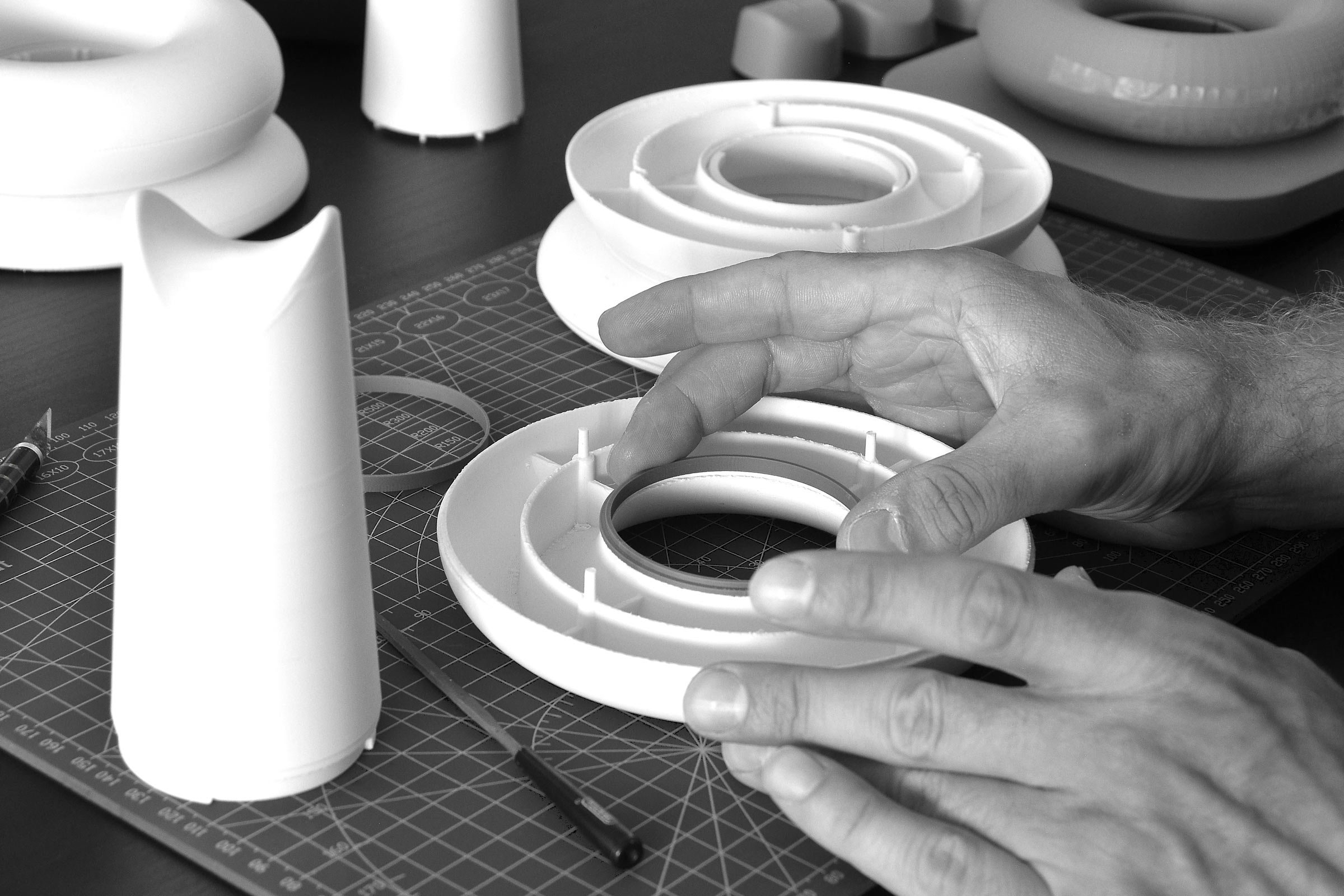
The core purpose of product prototyping is to bring ideas to life in a tangible form. By transforming early sketches and abstract thoughts into physical "proof-of-concept" models, designers and product creators can test their assumptions in the real world. Prototypes allow you to gather user feedback, validate functionality, and push your design in the right direction quickly and efficiently, minimising both development time and wasted capital.
"Anyone who has never made a mistake has never tried anything new." — Albert Einstein
Prototype Early, Learn Fast
My strongest advice to any creator is to prototype as early as possible and extract as much feedback as you can. Treat every iteration as a valuable learning exercise. There is zero shame in building something that fails or doesn't work as expected on the first try, that is literally the point of the process.
At this stage:
Forget aesthetics: Ignore styling details, colours, surface finishes, or visual flair.
Focus on function: Concentrate purely on whether the mechanism works and delivers real value to the end user.
An early stage working prototype is designed to be tested with rigour, modified, and refined. It’s not meant to look pretty or sit on a shelf as a piece of modern art; it’s a working tool.

2. Asking the Right Questions
Before diving into testing, create a targeted list of questions and potential problem areas you hope to resolve. As designers, our job is to pinpoint friction points, highlight room for improvement, and explore alternative ways of working.
This is why a low-cost, crude representation is so valuable: because the overall look doesn't matter, you have complete freedom to hack, cut, and modify the build until the core mechanics work in principle.
While running testing trials, pay attention to unexpected behaviours. You'll often discover insights that lead to key questions:
User Interaction: Why isn't the user interacting with the concept the way I anticipated?
Process Efficiency: Is there a more intuitive or efficient way to accomplish this task?
Feature Value: Does Feature 'X' actually solve a problem, or is it just extra noise?
Target Audience: Does this solution resonate properly with the end-user or are their extra areas to coinsider?
3. Trimming the Fat & Strengthening the Proposition
The ultimate takeaway from any prototyping exercise is identifying what is essential versus what is redundant:
Eliminate Complexity: If a feature increases manufacturing cost or engineering complexity without adding proportional value to the user, cut it.
Sharpen the Value Proposition: Keep your focus squarely on why a customer would choose your product over a competitor's.
By stripping away the unnecessary and validating the core function, you strengthen the overall business case for the product to exist in the marketplace.
Key Takeaways for Product Creators
Fail early, fail cheap: Low-fidelity prototypes yield high-value answers for minimal investment.
Function over form: Master the mechanics before worrying about industrial aesthetics.
Observe real behaviour: What users do with a prototype is far more revealing than what they say.
